

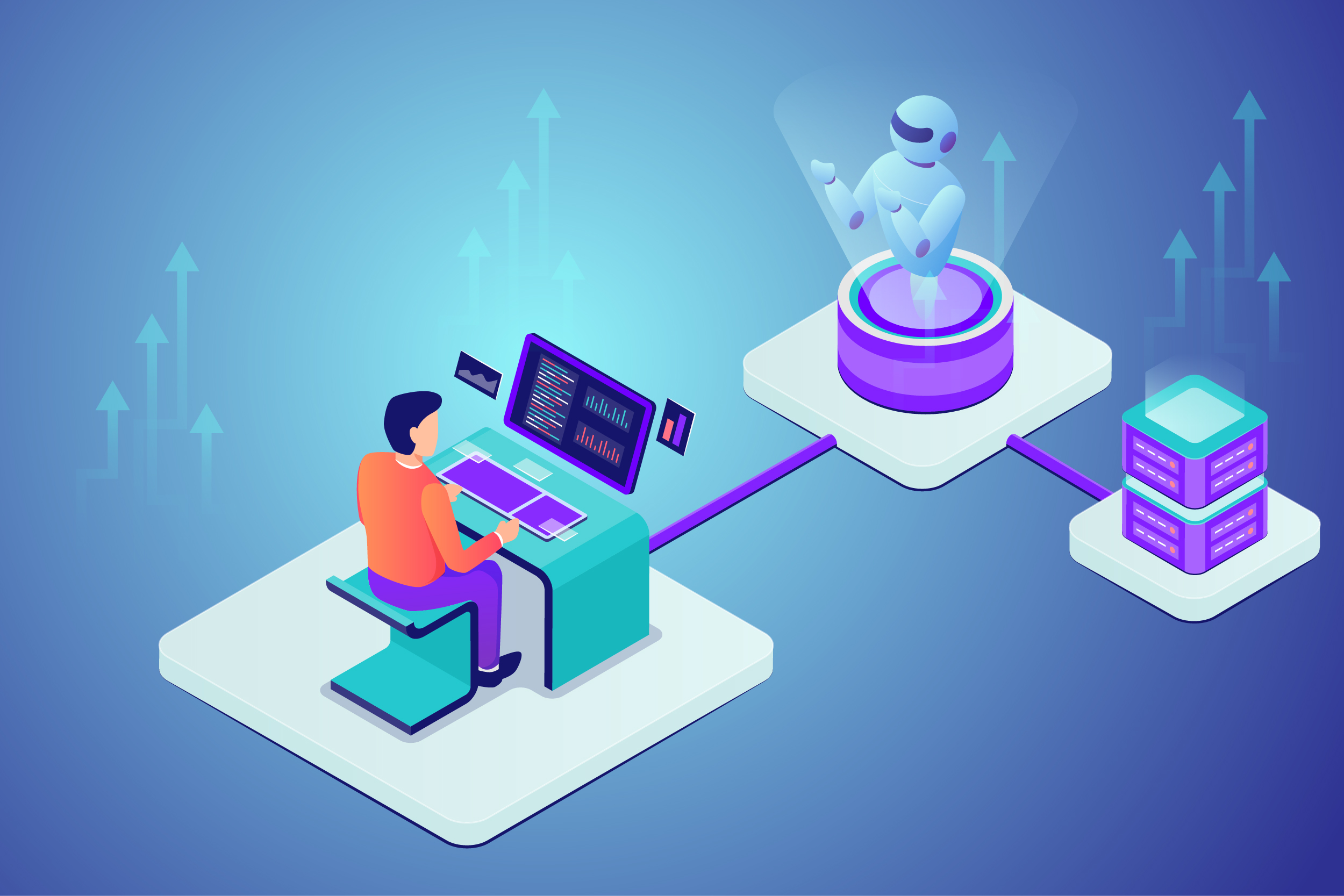
New technology products are entering the market at an astounding pace as innovation is rapidly changing. Software development has become a critical component in driving new technology trends and it is becoming an ever-broadening area of interest for data scientists. Data science and software development haven’t traditionally been aligned as they are today due to increased adoption of intelligent technologies to enhance digital initiatives.
The Collaboration of Data Science and Software Development
Software development is creating software with a core objective of helping businesses build their identity in the competitive market. The software solutions must do full justice to the innovative ideas by streamlining and automating the internal business operations to accomplish specific targets.
With the advent of Data Science, the focus of creating software is on developing smarter applications capable of learning from and adapting to user behavior and changing market environments.
It is becoming increasingly vital for software developers to understand the concept of data science as they need to work in tandem with data scientists to create software solutions that are functional and incorporate insights derived from data analysis.
The synergy between data science and software development has become more pronounced, pushing forward new frontiers in both fields. This includes integrating predictive models, machine learning algorithms and deep learning techniques. This integration convergence is redefining how software developers and data scientists collaborate for innovation, ultimately improving software development services to provide more intelligent and data driven solutions.
Emerging Trends in Data Science and Software Development
With gaining prominence, there are multiple emerging trends in both Data Science and Software Development driven by new technologies, methodologies, and industry needs. Here are a few trends.
Edge Computing for Data Processing
Data processing at the network edge is increasingly becoming the norm. It enables quicker real-time analysis without the need for a central cloud server. This decentralized method improves performance, lowers latency, and adds an extra layer of security by keeping sensitive information closer to its origin.
Data Democratization
Businesses are aiming for greater accessibility with the data among their departments. Tools like Power BI, Tableau, and many others are enabling data science to become more accessible to non-technical stakeholders, driving data-driven decision-making at all levels. This change is democratizing analytics to allow a greater range of team members to make fact-based decisions.
Natural Language Processing (NLP)
Another trend in AI Integration has been the rising state of Natural Language Processing (NLP). This processing enables the software applications to understand, interpret, and respond to human language. Voice assistants and chatbots are out of NLP. This is making interaction between humans and computers feel more natural and more intuitive and is rapidly becoming an important element in a multitude of applications.
SD Emerging Trends
Cloud-Native Development
Cloud-native development is expanding with microservices architecture, containers (like Docker), and orchestration (like Kubernetes) enabling scalable applications. This trend allows developers to create modular, resilient applications that can be easily deployed, updated, and scaled in a cloud environment.
Serverless Computing
Serverless architecture is also growing where developers simply need to write code without worrying about server management which simplifies deployment and scaling. Serverless computing is improving operational efficiency and accelerating time-to-market for software solutions.
API-first design
API-first design enables developers to direct their focus towards creating scalable APIs that are simple to integrate and extend.
AI integration
AI integration is another trend which is prevalent in both Data Science and Software Development. The infusion of AI in multi-faceted activities from data scrutiny to coding and even to automating software testing drastically reduces the human effort required to achieve optimal results.
The goal of incorporating AI into data science and software engineering is to redefine the relationship that exists between people and technology; not just improve productivity or automate tasks. Instead, in the coming years, it is likely that many teams consisting of data scientists, coders, and experts from various social disciplines will work together to develop solutions that are technologically efficient and socially responsible.
For software developers, this represents a watershed moment, where their goals evolve from building working systems toward actually building systems that learn and transform over time. Data scientists are stepping into an era that is invigorating; on the one hand, it is where their work entails much more than just conventional data analysis, and on the other, it enables software solutions leveraging the power of AI.
The Intersection of Data Science and Software Development
The evolving domains of AI and ML are blurring the lines between data science and software development. One such area of overlap is the rise of autonomous systems and intelligent applications.
The software developers who build these autonomous systems, just as much as the data scientists who must stay aware of algorithms, need to know how to efficiently incorporate the data science insight into their coding.
The blend between Data Science and software development is impacting sectors like healthcare, finance, retail, and so on. In healthcare, predictive algorithms use patient data to forecast medical conditions. Real-time detection of fraudulent activities is another realm where AI applications are deployed.
Also, there are shifts in software development practices to accommodate the influx of data science. The Agile methodology, for example, now occupies phases where feedback from data science teams is injected back into the development cycle. This allows data-driven iterations on software to happen quickly. This hybridization of agile and data science assists in developing software that is adaptable based on real user data, thus better aligning with actual market needs.
The Future
As both data science and software development continue to develop, professionals in both fields need to adopt the ever-growing AI and data-driven technologies. The software developers will have to gain a more profound knowledge of data analysis methods, while the data scientists will have to expand further to include software engineering practices that will enable them to scale up and produce ready solutions.
The AI integration is expected to become even deeper, with more complex machine learning algorithms and AI models being integrated into the most common software. The transformation of cloud computing, edge computing, and enhanced analytics platforms will provide the toolsets which are necessary for developers and data scientists to make the solutions more powerful and more efficient even more.
Conclusion
The fusion of data science and software development through AI integration is setting phase for a new era of technology. This trend is not only about technical advancement, but also about creating a more comfortable, skilled and human-focused digital world. As software developers and data continue to cooperate scientific cooperation, the ability to innovation seems infinite, in future we promise exciting developments in how we interaction and benefit.
