

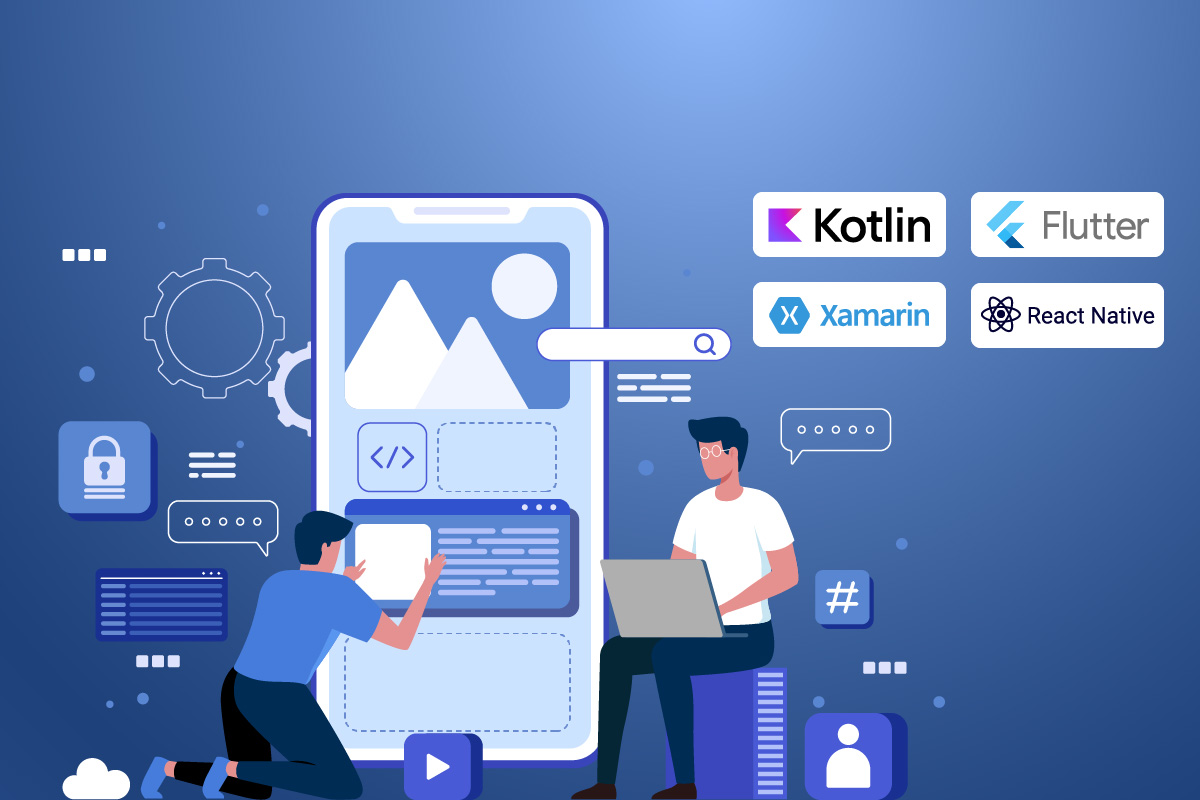
In 2025, Android app development remains a pioneering force in reshaping the way businesses interact and expand. Mobile apps have, over the last ten years, evolved into essential business tools, transforming client relations, sales strategies, and customer care. Mobile solutions have increasingly been in demand since the pandemic spiked global digital adoption, and companies now consider mobile-first approaches as the foundation of long-term growth.
A well-designed mobile app allows customized interaction between businesses and their audience, facilitating enhanced brand presence and greater operational effectiveness. Successful mobile experiences are extensions of customer relationships. For communications, entertainment, or productivity, businesses innovating through mobile platforms find lasting competitive strengths.
Importance of Mobile Applications in Modern Business
With a mobile presence, businesses have unparalleled flexibility and customer proximity. Mobile apps are often viewed as major differentiators in competitive markets due to their enhanced accessibility and user experience. For companies and startups, there are many benefits of mobile application adoption:
- Enhanced brand visibility and credibility.
- Continuous connection with both potential and existing customers.
- A strong and loyal customer base nurtured through personalized engagement.
- Superior customer support through automation, chatbots, and round-the-clock availability.
Built-in artificial intelligence (AI) and machine learning (ML) capabilities make current Android applications data-rich channels for extracting user insights that drive strategic decisions. Modern apps improve overall satisfaction, simplify procedures, and offer predictive capabilities that anticipate consumer needs. Android applications are now incorporated inside company ecosystems for strategic advantages.
Android Studio
Developing a mobile app first requires a robust environment. Android Studio remains the official Integrated Development Environment (IDE) for Android. It has evolved significantly and now provides developers with better code editing, debugging, and performance profiling. To make the app development process smoother from the start to the end, it combines the Android SDK, Emulator, and Gradle build system as a unit.
Android Studio is the foundation for app development, but a good knowledge of the Android framework by the developer is necessary. The framework provides a complete suite of APIs, UI components, and tools that enable easy coding and great user experiences without bugs. It also enables developers to create applications that are interactive, responsive, and visually attractive to a wide range of devices including smartphones, tablets, foldables, and wearables.
The expanding Internet of Things (IoT) ecosystem along with smart devices has enabled Android developers to use advanced integrations which include speech recognition, gesture control, and augmented reality (AR) modules. The Android framework provides strong protection for applications which enables them to stay up to date with future technology requirements. It handles growth and adapts to changing user needs.
Elevate Your App with Our Expert Development Services
Ready to build a standout Android app? Our expert team specializes in using top frameworks to create high-performance, user-friendly apps. Contact us today to start your project and bring your app vision to life!
Leading Android App Development Frameworks in 2025
The landscape of Android app development frameworks has expanded significantly, providing developers with a wide array of contemporary solutions tailored to meet diverse business requirements. In 2025, several key frameworks stand out as leaders in the Android app development.
1. Kotlin
Kotlin has clearly established itself as the dominant language for developing native Android applications. It is the preferred choice over Java and has provided a concise syntax, greater null safety, and increased efficiency. Google’s endorsement and strong community support have further aided Kotlin’s rise in the developer community.
One of Kotlin’s main advantages is its interoperability with Java, which allows developers to simply include legacy code and already available Java libraries. Moreover, improvements in Kotlin Multiplatform Mobile (KMM) in 2025 will make it easier to share business logic between Android and iOS devices, therefore cutting both development time and costs.
2. Flutter
Google’s Flutter has quickly grown to become one of the most capable cross-platform frameworks. Using the Dart programming language, Flutter provides a single codebase that compiles straight into native ARM code for both Android and iOS.
Flutter’s advantage comes from its capacity to produce native-quality UI experiences with steady performance across all platforms. It also supports strong community libraries, dynamic themes, and animations. Flutter is used by many large-scale, enterprise-level apps and startups to deliver interesting user experiences
3. Xamarin
Xamarin is still the best framework for C# developers to build Android, iOS, and even Windows apps that share code. Xamarin offers you a more uniform cross platform development experience thanks to its position in Microsoft’s .NET MAUI (Multi-platform App UI). Developers can yet achieve native-level performance and responsiveness using a typical C# codebase.
Xamarin’s strong security capabilities and life cycle management tools are vital in the corporate environment and for creating applications to fit companies. Its capability to centrally deploy, test, and update applications aligns well with contemporary DevOps practices.
4. React Native
React Native, developed by Meta, is a top choice for hybrid app development. It allows developers to create applications using JavaScript and React principles, offering the cross-platform flexibility of hybrid apps while delivering performance comparable to native apps. The framework is open source, benefits from strong community support, and is regularly updated with new API bridges,
New additions such as the New Fabric renderer and TurboModules improve rendering performance and lower memory consumption. React Native’s modular structure and adaptable design allow developers to integrate native code in Java, Swift, or Objective-C for components that require high performance.
5. Ionic (for context)
Ionic continues to be a preferred choice for developers needing flexibility and massive docs. Built on top of standards-based web technologies like HTML, CSS, and JavaScript, Ionic allows teams to quickly create PWAs and hybrid apps. Its continued open-source availability under the MIT license and growing plugin ecosystem make it a favorite among small and mid-scale organizations.
Developers can seamlessly combine web frameworks like Angular, React, or Vue with Ionic to power dynamic, interactive user experiences.
Innovations Shaping Android Development in 2025
App development in 2025 is about creating adaptive digital ecosystems rather than merely building functional products. Some of the innovations shaping Android development today include:
AI-Driven User Personalization: Apps now harness on-device AI capabilities via Google’s ML Kit to deliver predictive, context-aware user experiences.
Cloud-Based Development Environments: Platforms like Firebase and AWS Amplify simplify backend management while enabling real-time synchronization and analytics.
Instant Apps and Progressive Web Apps (PWAs): Businesses now leverage instant-load applications to reach consumers who prefer lightweight, installation-free experiences.
These trends highlight that Android development is now deeply intertwined with emerging technologies that redefine how value is delivered to users.
Conclusion
The evolution of the whole mobile technology environment over the past decade is quite evident in the Android app development transition. Single-function tools have evolved into multi-layered digital solutions, with Android applications being the heart of innovations, operational agility, and fresh income streams throughout sectors.
Android apps mostly strive to create closer connections with customers, back data-driven insights, and provide brand loyalty that helps long-term success via flawless experiences. Organizations that choose to partner with professional development companies will be able to unleash enormous possibilities using creative applications fusing user-friendly design, scalable backend infrastructure, and data intelligence.
