

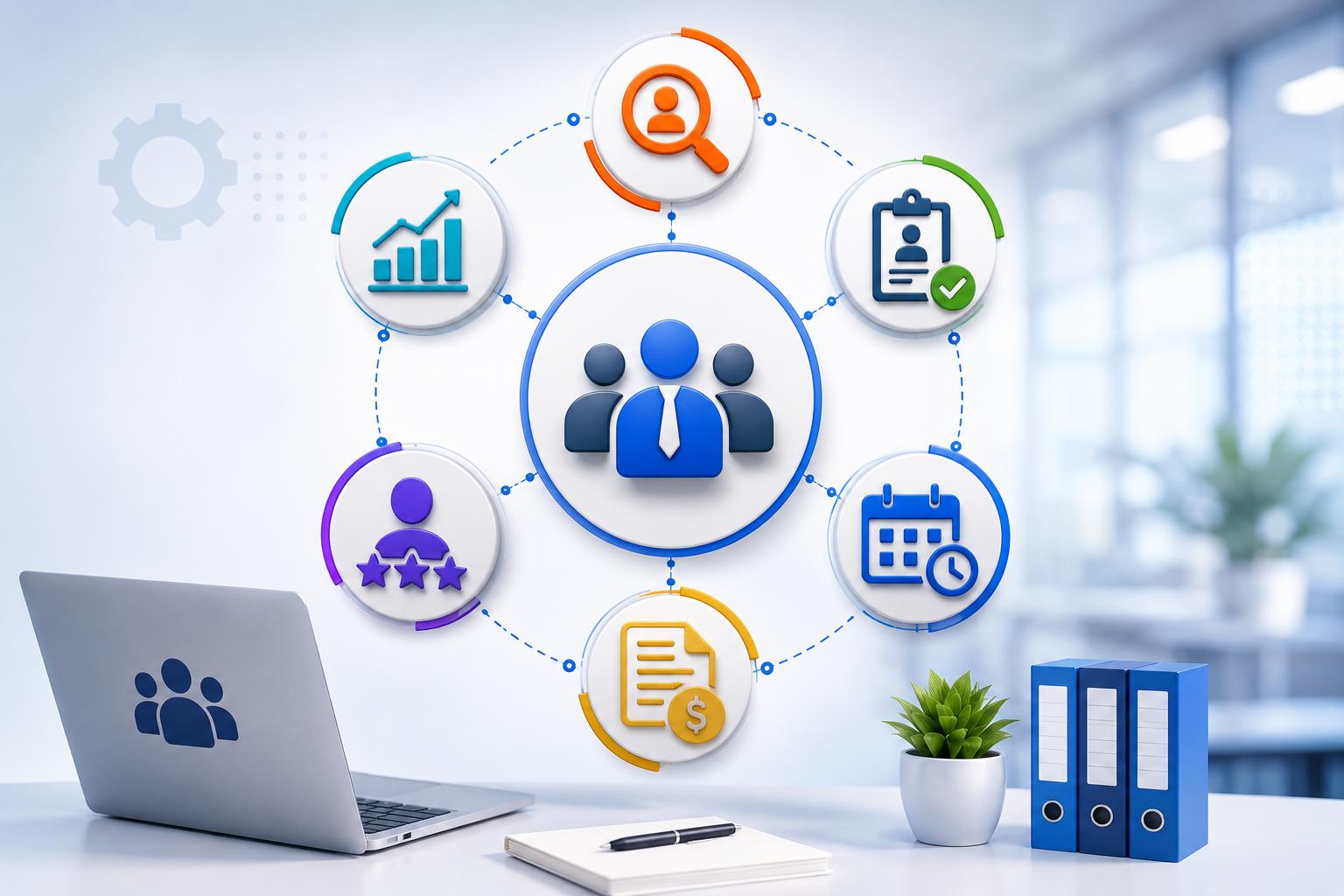
HR teams are responsible for much more than hiring and employee administration. They manage recruitment, onboarding, employee data, attendance, performance reviews, payroll coordination and many other processes that keep an organization running smoothly.
However, when these activities depend on spreadsheets, emails and manual follow-ups, HR teams can spend a significant amount of time on repetitive administrative work. This can lead to delays, inconsistent processes and avoidable errors.
HR automation helps businesses streamline repetitive, rule-based processes, making HR processes to automate an important step toward improving efficiency, reducing errors and giving HR professionals more time to focus on employees, strategy and business growth.
Here are six HR processes to automate that businesses should consider for greater efficiency.
1. Recruitment and Candidate Screening
Recruitment is often one of the most time-consuming HR processes. From receiving applications to scheduling interviews, recruiters may need to manage hundreds of repetitive tasks.

Automating parts of the recruitment process can help businesses:
- Collect and organize candidate applications
- Screen resumes based on predefined criteria
- Send acknowledgement emails automatically
- Schedule interviews and reminders
- Track candidates through different hiring stages
- Notify candidates about the next steps
This does not mean that hiring decisions should be fully automated. Human judgement remains essential when evaluating candidates, culture fit and long-term potential.
However, automation can reduce the administrative workload around recruitment and give HR teams more time to focus on meaningful candidate interactions.
For businesses looking to modernize their HR operations, ParamInfo blog on Oracle HCM Cloud and how it transforms HR operations also explains how cloud-based HR platforms can support recruitment, onboarding, talent management and workforce processes.
2. Employee Onboarding
A new employee’s experience starts well before their first day at work. Yet onboarding often requires HR teams to coordinate multiple departments, including IT, finance, administration and business managers.
A manual onboarding process may involve sending multiple emails, collecting documents, creating employee records, requesting system access and following up on incomplete tasks.

Automation can help create a structured onboarding workflow.
For example, once a candidate accepts an offer, an automated workflow can trigger:
- Welcome emails
- Document collection requests
- Digital onboarding forms
- IT access requests
- Equipment allocation tasks
- Orientation schedules
- Policy acknowledgement reminders
This ensures that tasks are assigned to the right teams at the right time.
Automated workflows can also improve consistency. Every new employee follows a defined process, reducing the risk of important steps being missed.
Businesses developing employee-facing digital solutions can also explore ParamInfo article on how mobile app solutions propel digital transformation, which discusses how mobile applications can streamline workflows and support automation across functions, including HR management.
3. Leave and Attendance Management
Managing employee leave manually can become difficult as a business grows. HR teams need to track requests, approvals, leave balances and attendance information while ensuring that managers and employees have access to accurate records.
Automating leave and attendance management can simplify the entire process.
Employees can submit leave requests through a digital system, while automated workflows can route requests to the appropriate manager for approval. Once approved, the system can update the employee’s leave balance and relevant records.
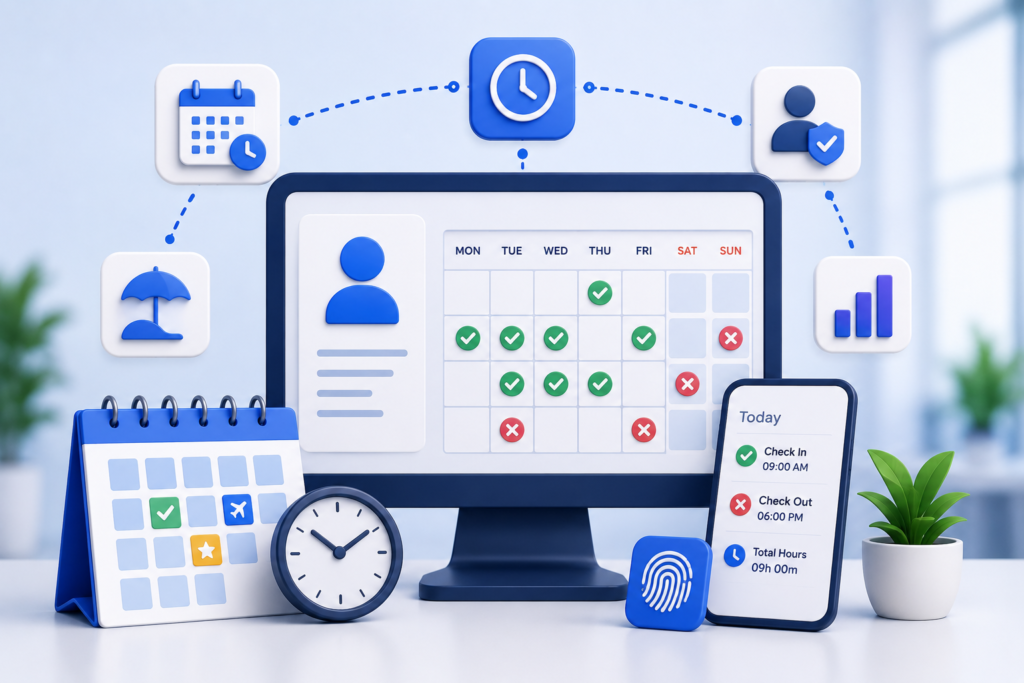
Key benefits include:
- Faster leave approvals
- Real-time leave balance tracking
- Fewer manual data-entry errors
- Automated reminders and notifications
- Better attendance visibility
- Easier reporting
Automation can be especially valuable when businesses manage employees across multiple locations or departments.
The goal is to reduce unnecessary administrative work while maintaining the right level of managerial and HR oversight.
4. Payroll and Employee Data Management
Payroll-related processes require accuracy. Incorrect employee data, attendance records or salary changes can create significant administrative and compliance challenges.
While businesses should maintain proper controls over payroll decisions, many supporting tasks can be automated.
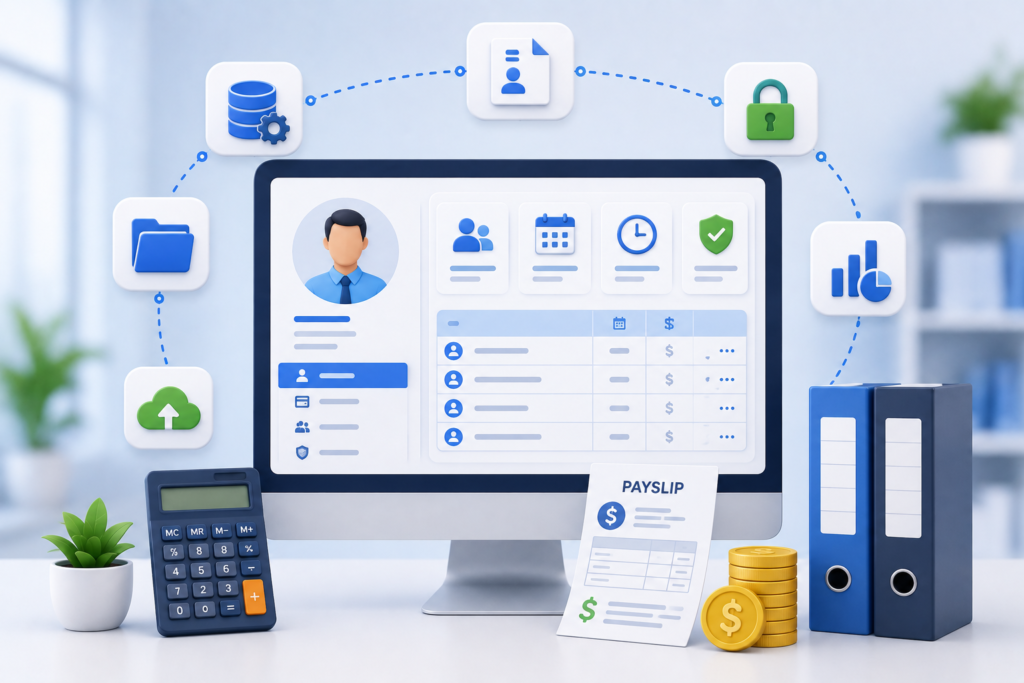
These may include:
- Employee data updates
- Salary change workflows
- Approval reminders
- Attendance data synchronization
- Leave information updates
- Payroll document distribution
- Compliance notifications
The biggest opportunity often comes from reducing duplicate data entry across multiple systems.
For example, if HR, attendance and payroll systems operate separately, employees may need to enter or update the same information multiple times. Integrating these systems can help data move more efficiently between workflows.
This is closely connected to the broader concept of business automation. ParamInfo article on hyperautomation and the future of business transformation explores how technologies such as AI, machine learning, robotic process automation and analytics can help organizations automate complex processes and improve efficiency.
5. Performance Management
Performance management involves much more than conducting an annual review. Businesses may need to manage goal setting, employee self-assessments, manager feedback, review schedules and development plans.
Without automation, HR teams often spend considerable time sending reminders and following up with employees and managers.
A digital performance management workflow can automate routine activities such as:
- Sending review reminders
- Setting performance review deadlines
- Triggering self-assessment forms
- Routing reviews to managers
- Tracking completion status
- Storing feedback centrally
- Generating performance reports
Automation helps ensure that the process moves forward, but performance discussions themselves should remain human.
Technology can manage the workflow. Managers and HR professionals should provide the context, coaching and feedback that employees need.
Modern HR platforms are increasingly combining automation with AI-powered insights. ParamInfo article on how Oracle Fusion AI enhances enterprise productivity explains how intelligent automation and predictive analytics can streamline workflows and reduce manual effort across enterprise functions, including HR.
6. Employee Lifecycle and HR Reporting
Employee management involves several important milestones throughout the employee lifecycle.
These can include:
- Probation reviews
- Contract renewals
- Promotions
- Transfers
- Role changes
- Exit processes
- Offboarding activities
When these workflows are managed manually, important deadlines can be missed.
Automation can trigger notifications and tasks based on specific events or dates. For example, an upcoming probation review can automatically notify the manager and HR team. Similarly, an employee exit can trigger a structured offboarding checklist for HR, IT and other relevant departments.
Automation can also improve HR reporting.
Instead of manually collecting data from different systems, integrated HR workflows can help businesses monitor:
- Headcount
- Recruitment activity
- Employee turnover
- Leave patterns
- Performance review completion
- Workforce trends
Better visibility can help HR leaders make more informed workforce decisions.
For organizations planning broader process modernization, ParamInfo recent article on a digital transformation roadmap for UAE enterprises in 2026 offers useful insights into starting with business outcomes, identifying operational inefficiencies and building transformation initiatives in manageable phases.
How to Decide Which HR Processes to Automate First
Not every HR process needs to be automated immediately.
Businesses should begin by identifying processes that are repetitive, time-consuming and based on clearly defined rules.
Good candidates for automation usually include processes that are:
Highly Repetitive
Tasks performed frequently using the same steps are strong candidates for automation.
Prone to Manual Errors
Processes involving repeated data entry can benefit from automated workflows and system integration.
Dependent on Multiple Approvals
Automated approval workflows can reduce the need for constant email follow-ups.
Difficult to Track Manually
If HR teams regularly need to ask, “Who is responsible for this task?” or “Has this process been completed?”, automation can improve visibility.
Connected to Multiple Departments
HR processes often involve IT, finance and business managers. Automated workflows can improve coordination between teams.
The best approach is usually to start with one high-impact process, measure the results and then expand automation gradually.
Why HR System Integration Matters
Automation becomes more effective when business systems can share information.
Consider a new employee joining an organization. The onboarding process may involve HR, IT, payroll and facilities. If every department uses disconnected systems, employees may still face delays even when individual tasks are automated.
System integration can help connect these workflows and reduce duplicate work.
For example:
HR system → Employee information → Payroll system
HR onboarding → New employee notification → IT access workflow
Leave management → Attendance data → Payroll records
Connecting systems can help organizations create smoother end-to-end processes instead of automating isolated tasks.
This broader approach is part of digital transformation. As discussed in ParamInfo article, Making Digital Transformation Your Top Strategic Priority, businesses can use technologies such as automation, AI and data analytics to reduce manual work, improve processes and increase operational efficiency.
Automation Should Support HR, Not Replace the Human Element
The purpose of HR automation is not to remove people from HR.
Some of the most important HR responsibilities require empathy, communication and human judgement. These include resolving employee concerns, conducting interviews, providing career guidance and building workplace culture.
Automation should instead handle repetitive activities such as:
- Sending reminders
- Routing approvals
- Updating records
- Collecting information
- Tracking deadlines
- Generating routine reports
This gives HR professionals more time to focus on high-value responsibilities.
As businesses move toward more advanced automation, technologies such as low-code platforms can also help teams build and improve workflows more quickly. ParamInfo article on how enterprises use low-code for digital transformation discusses how low-code solutions can help businesses automate routine tasks and respond to operational requirements faster.
HR automation can help businesses reduce repetitive administrative work and create more consistent employee processes.
The six HR processes that businesses should priorities include:
- Recruitment and candidate screening
- Employee onboarding
- Leave and attendance management
- Payroll and employee data workflows
- Performance management
- Employee lifecycle management and HR reporting
The right approach is not to automate everything at once. Businesses should identify the processes creating the biggest delays, errors or administrative workload and priorities those first.
By combining workflow automation, system integration and modern HR technology, organizations can build more efficient HR operations while allowing HR professionals to focus on what technology cannot replace: people, relationships and strategic workforce development.
ParamInfo supports organizations in their digital transformation journey by helping them modernize enterprise processes, improve technology integration and implement solutions designed around real business requirements.
1. What are HR processes that businesses can automate?
Businesses can automate recruitment and candidate screening, employee onboarding, leave and attendance management, payroll-related workflows, performance management, and employee lifecycle processes.
2. How does HR automation benefit businesses?
HR automation can reduce repetitive administrative work, minimize manual errors, improve process consistency and give HR teams more time to focus on employees and strategic initiatives.
3. Can recruitment and candidate screening be automated?
Yes. Businesses can automate application collection, candidate tracking, interview scheduling, reminders and notifications. However, final hiring decisions should continue to involve human judgement.
4. How does automation improve employee onboarding?
Automation can trigger welcome emails, document collection, onboarding forms, IT access requests, equipment allocation and orientation schedules, helping ensure important tasks are completed on time.
5. Can leave and attendance management be automated?
Yes. Employees can submit leave requests digitally, while automated workflows can route approvals, update leave balances, send reminders and improve attendance visibility.
6. Which payroll processes can be automated?
Supporting tasks such as employee data updates, approval reminders, attendance synchronization, leave updates, payroll document distribution and compliance notifications can be automated.
7. How can automation improve performance management?
Automation can manage review reminders, deadlines, self-assessment forms, manager workflows, completion tracking and performance reporting. Human managers should still lead meaningful feedback and coaching conversations.
8. Can employee lifecycle management be automated?
Yes. Businesses can automate workflows for probation reviews, contract renewals, promotions, transfers, role changes, exit processes and offboarding activities.
9. Which HR processes should businesses automate first?
Businesses should priorities repetitive, time-consuming processes that are prone to manual errors, involve multiple approvals or are difficult to track manually.
10. Why is HR system integration important?
Integration helps HR, payroll, attendance and other business systems share relevant information, reducing duplicate data entry and creating smoother end-to-end workflows.
11. Will HR automation replace HR professionals?
No. Automation should support HR teams by handling repetitive, rule-based tasks. Human expertise remains essential for employee relationships, interviews, coaching and workplace culture.
12. How should businesses start implementing HR automation?
Businesses should start with one high-impact process, measure the results and gradually expand automation based on business needs.
