


In today’s digital-first business environment, technology is no longer just a support function-it is the backbone of every successful organization. From customer interactions and employee collaboration to financial transactions and data management, every critical business operation depends on a reliable IT infrastructure. Yet, many organizations continue to rely on outdated systems, aging hardware, fragmented networks, and legacy applications that silently increase operational risks.
Weak IT infrastructure is often overlooked because its impact is not immediately visible. Systems may continue to function despite occasional slowdowns, network interruptions, or recurring maintenance issues. However, beneath the surface, these inefficiencies can lead to significant business challenges, including cybersecurity vulnerabilities, operational downtime, reduced employee productivity, compliance failures, and escalating IT costs.
As businesses embrace cloud computing, artificial intelligence (AI), automation, and digital transformation, having a modern, scalable IT infrastructure has become a competitive necessity rather than a technical upgrade. Organizations that fail to modernize risk falling behind competitors that can innovate faster, respond to customer demands more efficiently, and adapt to changing market conditions.
At ParamInfo, we help organizations modernize their technology ecosystem through Cloud Migration Services, Digital Transformation solutions, and Managed IT Services, enabling businesses to build secure, scalable, and future-ready IT environments.
In this article, we’ll explore the hidden business risks of weak IT infrastructure, their long-term impact, and the strategies organizations can implement to build a resilient and high-performing IT foundation.
What Is IT Infrastructure?
IT infrastructure refers to the complete collection of hardware, software, networking components, cloud platforms, storage systems, cybersecurity tools, and IT services that enable an organization to operate efficiently. It forms the technological foundation that supports daily business operations, communication, application delivery, and data management.
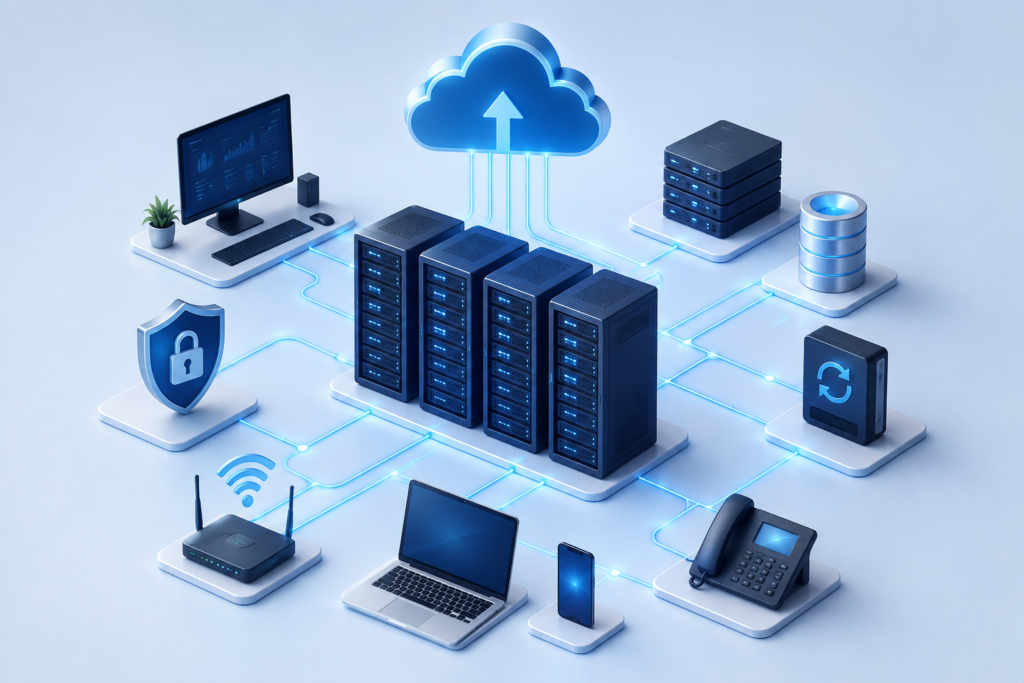
A modern enterprise IT infrastructure typically includes:
- Physical and virtual servers
- Cloud computing platforms
- Network infrastructure
- Business applications
- Storage systems
- Cybersecurity solutions
- Backup and disaster recovery systems
- End-user devices
- Monitoring and management tools
When these components are properly integrated and maintained, organizations experience greater efficiency, improved security, and enhanced scalability. Conversely, outdated or poorly managed infrastructure creates hidden business risks that extend far beyond the IT department.
Businesses pursuing digital modernization often begin by evaluating their infrastructure and identifying opportunities to migrate legacy workloads to the cloud. ParamInfo Cloud Migration Services help organizations transition to secure and scalable cloud environments while minimizing operational disruptions.
Why Weak IT Infrastructure Is a Growing Business Risk
Technology evolves rapidly, yet many organizations continue operating with infrastructure that was designed to meet business needs from a decade ago. Legacy systems may still perform basic functions, but they often struggle to support modern applications, remote work environments, advanced cybersecurity requirements, and data-intensive business operations.
Common indicators of weak IT infrastructure include:
- Frequent application crashes
- Slow network performance
- Outdated operating systems
- Unsupported software
- Aging servers
- Limited storage capacity
- Poor cybersecurity controls
- Lack of system monitoring
- Manual IT processes
While these issues may appear manageable individually, together they create a fragile technology environment that can significantly hinder business growth and innovation.
Organizations investing in Digital Enterprise Transformation gain the flexibility to modernize legacy infrastructure, improve operational efficiency, and support emerging technologies such as AI, automation, and advanced analytics.
1. Increased Downtime Leads to Significant Financial Losses
One of the most immediate consequences of weak IT infrastructure is unplanned downtime. Whether caused by hardware failures, network outages, software crashes, or outdated systems, downtime disrupts business operations and directly impacts revenue.
Every minute of downtime can result in:
- Lost sales opportunities
- Interrupted customer services
- Delayed project delivery
- Employee idle time
- Reduced customer trust
For industries such as healthcare, banking, retail, manufacturing, and logistics, even a short outage can have serious operational and financial consequences.
Beyond the immediate revenue loss, downtime often damages a company’s reputation. Customers expect services to be available around the clock, and recurring disruptions can lead them to seek alternative providers.
Modern IT infrastructure minimizes downtime through:
- High-availability architecture
- Redundant systems
- Automated monitoring
- Predictive maintenance
- Disaster recovery planning
Organizations that proactively invest in infrastructure resilience significantly reduce business interruptions and improve overall operational continuity.
2. Cybersecurity Threats Become Easier to Exploit
Cybersecurity has become one of the biggest concerns for businesses worldwide. Unfortunately, outdated IT infrastructure provides cybercriminals with an ideal environment to exploit vulnerabilities.
Legacy operating systems and unsupported software often stop receiving security updates, leaving organizations exposed to:
- Ransomware attacks
- Malware infections
- Data breaches
- Insider threats
- Phishing attacks
- Unauthorized system access

Weak infrastructure also makes it difficult to implement modern security technologies such as Zero Trust Architecture, Multi-Factor Authentication (MFA), endpoint detection, and AI-driven threat monitoring.
The financial consequences of a cybersecurity incident extend beyond immediate recovery costs. Businesses may face regulatory penalties, legal liabilities, customer compensation claims, and long-term reputational damage.
Implementing proactive Managed IT Services enables organizations to continuously monitor their infrastructure, apply security patches, detect suspicious activities, and respond quickly to emerging threats before they impact business operations.
3. Reduced Employee Productivity and Operational Efficiency
Employees depend on technology to perform their daily responsibilities efficiently. When IT systems are slow, unreliable, or frequently unavailable, productivity declines across the organization.
Common productivity challenges caused by weak infrastructure include:
- Slow application performance
- Delayed file access
- Frequent software crashes
- Network latency
- Long login times
- Constant IT support requests
Although these interruptions may seem minor, they accumulate over time, resulting in hundreds of lost working hours each year.
For example, if employees lose just 20 minutes each day due to slow systems, an organization with hundreds of employees could lose thousands of productive hours annually. This directly affects project timelines, customer service quality, and overall business performance.
Modern infrastructure improves collaboration by supporting:
- Cloud-based applications
- Secure remote work
- Real-time collaboration platforms
- Faster data processing
- Automated workflows
Organizations that modernize their IT environment create a more efficient workplace where employees can focus on innovation rather than troubleshooting technology issues.
4. Rising IT Maintenance and Operational Costs
Many organizations postpone infrastructure upgrades to avoid large capital investments. However, maintaining outdated systems often becomes significantly more expensive over time.
Legacy infrastructure typically requires:
- Frequent hardware repairs
- Emergency maintenance
- Higher electricity consumption
- Specialized technical expertise
- Expensive software support contracts
- Increased downtime recovery costs
These ongoing expenses often exceed the cost of proactive modernization.

Additionally, older hardware becomes increasingly difficult to replace as manufacturers discontinue components and support services. IT teams spend more time maintaining aging infrastructure instead of focusing on strategic initiatives that drive business growth.
A well-planned infrastructure modernization strategy helps organizations reduce operational expenses while improving performance, reliability, and scalability.
5. Compliance and Regulatory Risks
As businesses increasingly rely on digital systems to store sensitive customer and business information, regulatory compliance has become a critical aspect of IT management. Industries such as healthcare, banking, insurance, manufacturing, and government must comply with strict regulations regarding data privacy, cybersecurity, and information management.
A weak IT infrastructure makes compliance significantly more difficult due to:
- Outdated security protocols
- Unsupported operating systems
- Inadequate access controls
- Lack of audit trails
- Poor data backup practices
- Delayed software updates
Failure to meet compliance requirements can result in financial penalties, legal consequences, reputational damage, and loss of customer trust.
Modern IT infrastructure incorporates centralized monitoring, automated compliance reporting, encryption, and robust identity management, helping organizations stay compliant while reducing operational risks.
Businesses adopting a modern Digital Enterprise Transformation strategy are better equipped to meet evolving regulatory requirements while maintaining secure and scalable operations.
6. Poor Customer Experience and Brand Reputation
Customer expectations have never been higher. Whether interacting through a website, mobile application, customer portal, or support system, users expect fast, secure, and uninterrupted digital experiences.
Unfortunately, weak IT infrastructure often results in:
- Slow-loading websites
- Application crashes
- Payment processing failures
- Delayed customer support
- Interrupted online services
- Frequent service outages
Every technical issue directly affects customer satisfaction. A slow website or unavailable application may cause potential customers to abandon purchases and choose competitors instead.
Modern IT infrastructure ensures:
- High system availability
- Faster application performance
- Secure customer interactions
- Reliable digital services
- Better customer engagement
Investing in IT modernization isn’t just about technology-it’s about protecting your brand reputation and delivering exceptional customer experiences.
7. Limited Scalability Restricts Business Growth
Business growth often brings increased workloads, more users, higher data volumes, and greater application demands. Organizations with legacy IT infrastructure frequently struggle to scale because their systems were not designed to support modern business requirements.
Common scalability challenges include:
- Limited server capacity
- Slow deployment of new applications
- Hardware procurement delays
- Network bottlenecks
- Storage limitations
- Manual resource allocation
These limitations prevent organizations from responding quickly to market opportunities.
Cloud-based infrastructure addresses these challenges by allowing businesses to scale computing resources on demand without investing heavily in physical hardware.
ParamInfo Cloud Migration Services help organizations transition from traditional infrastructure to flexible cloud environments that support long-term business growth.
8. Increased Risk of Data Loss and Business Disruption
Data is one of the most valuable assets for any organization. Losing critical business information can have devastating consequences, including financial losses, operational disruptions, regulatory violations, and reputational damage.
Weak IT infrastructure often lacks:
- Automated backups
- Disaster recovery planning
- Redundant storage
- Secure cloud backups
- Business continuity strategies
Common causes of data loss include:
- Hardware failures
- Cyberattacks
- Human error
- Software corruption
- Natural disasters
- Power outages
Without a robust disaster recovery plan, recovering from these incidents can take days or even weeks.
Modern IT environments integrate automated backup solutions, cloud storage, redundancy, and disaster recovery mechanisms to ensure business continuity during unexpected events.
9. Slower Digital Transformation and Innovation
Today’s organizations are rapidly adopting technologies such as Artificial Intelligence (AI), Machine Learning (ML), automation, advanced analytics, and cloud-native applications.
However, outdated infrastructure often becomes the biggest obstacle to innovation.
Legacy systems may:
- Lack cloud compatibility
- Prevent software integration
- Limit automation capabilities
- Reduce application performance
- Increase deployment complexity
As a result, businesses struggle to implement new technologies that improve operational efficiency and customer experiences.

Modern IT infrastructure provides the flexibility required to adopt emerging technologies and accelerate digital transformation initiatives.
Organizations that invest in infrastructure modernization today are better prepared to embrace future innovations.
10. Competitive Disadvantage in a Digital Economy
Technology is now a competitive differentiator.
Businesses with modern infrastructure can:
- Launch products faster
- Deliver superior customer experiences
- Improve operational efficiency
- Enhance cybersecurity
- Support hybrid work environments
- Make data-driven decisions
Organizations relying on outdated infrastructure often face slower decision-making, increased operational costs, and reduced agility.
Over time, this technological gap widens, making it increasingly difficult to compete with digitally mature organizations.
Modern infrastructure is no longer an IT investment-it is a business growth strategy.
Warning Signs Your IT Infrastructure Needs Immediate Attention
If your organization experiences any of the following issues regularly, it may be time to modernize your infrastructure:
- Frequent system downtime
- Slow network performance
- Increasing cybersecurity incidents
- Aging servers and hardware
- Unsupported software
- High IT maintenance costs
- Storage limitations
- Poor application performance
- Difficulty supporting remote work
- Delayed software deployments
- Limited scalability
- Inefficient disaster recovery
Recognizing these warning signs early helps organizations avoid costly disruptions and maintain long-term operational resilience.
Best Practices for Building a Strong IT Infrastructure
A resilient IT infrastructure requires continuous improvement rather than one-time upgrades. Organizations should adopt a proactive approach to technology management by implementing the following best practices:
Conduct Regular Infrastructure Assessments
Evaluate your existing infrastructure to identify outdated hardware, unsupported software, and potential security vulnerabilities.
Modernize Legacy Systems
Replace aging systems with scalable, cloud-ready technologies that support future business growth.
Strengthen Cybersecurity
Implement:
- Multi-Factor Authentication (MFA)
- Endpoint Protection
- Identity and Access Management (IAM)
- Continuous Security Monitoring
- Zero Trust Security Framework
Invest in Cloud Adoption
Cloud infrastructure improves flexibility, availability, disaster recovery, and operational efficiency while reducing hardware dependency.
Automate Monitoring
Real-time monitoring helps IT teams detect issues before they affect business operations.
Implement Disaster Recovery Plans
Regularly test backup systems and disaster recovery procedures to ensure rapid recovery during emergencies.
Partner with Experienced IT Experts
Working with experienced technology partners helps organizations reduce risks while accelerating digital transformation initiatives.
How ParamInfo Helps Businesses Modernize IT Infrastructure
At ParamInfo, we understand that modern businesses require secure, scalable, and future-ready IT environments to remain competitive.
Our end-to-end technology solutions help organizations optimize their infrastructure, improve operational efficiency, and strengthen cybersecurity.
Our expertise includes:
- Cloud Migration Services
- Digital Enterprise Transformation
- Managed IT Services
- Artificial Intelligence Solutions
- Enterprise Application Services
- IT Infrastructure Consulting
- Infrastructure Monitoring
- Cybersecurity Solutions
- Application Modernization
Whether you’re planning a cloud migration, upgrading legacy systems, or implementing enterprise-wide digital transformation, ParamInfo provides customized solutions that align technology with your business goals.
Explore Our Services:
- Cloud Migration Services
- Digital Enterprise Transformation
- Blogs & Insights
- Home
A weak IT infrastructure doesn’t fail overnight-it gradually affects every aspect of your business. From unexpected downtime and cybersecurity vulnerabilities to rising operational costs and poor customer experiences, outdated technology silently limits productivity, innovation, and long-term growth.
As organizations continue their digital transformation journeys, investing in modern IT infrastructure is no longer optional. It is a strategic necessity that enables businesses to scale efficiently, strengthen security, improve operational resilience, and deliver exceptional customer experiences.
Modernizing your infrastructure today helps prepare your organization for tomorrow’s challenges while creating a strong foundation for sustainable growth.
If your business is experiencing recurring IT issues, now is the time to evaluate your technology environment and take proactive steps toward building a resilient, secure, and future-ready infrastructure.
