

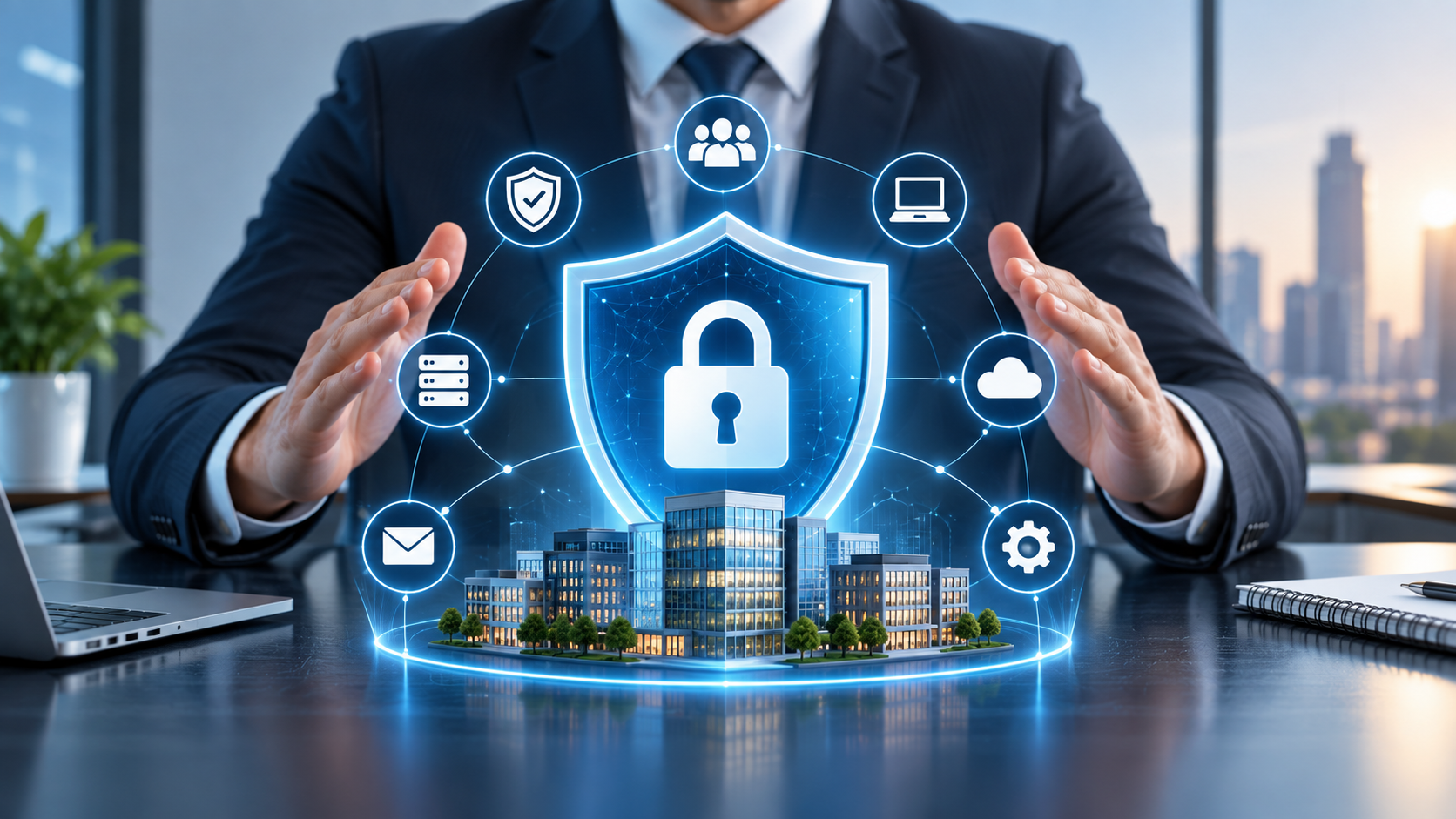
Cybersecurity is no longer a concern limited to large enterprises. Businesses of every size rely on digital systems, cloud platforms, applications, networks and connected devices to run their daily operations. As this digital environment grows, so does the number of potential security risks.
A successful cyberattack can disrupt operations, expose sensitive information, affect customer trust and create significant recovery costs. Yet many businesses struggle to maintain the in-house expertise, tools and resources needed to monitor and manage cybersecurity around the clock.
This is where managed cybersecurity services can help.
Managed cybersecurity gives businesses access to specialized security expertise, monitoring and support without requiring them to build and operate every security capability internally.
1. Get Access to Specialized Cybersecurity Expertise
Cybersecurity is a broad and constantly evolving field. Businesses may need expertise in areas such as:
- Network security
- Endpoint protection
- Cloud security
- Identity and access management
- Threat monitoring
- Vulnerability management
- Security incident response
- Compliance and risk management
Building an in-house team with expertise across all these areas can be challenging and expensive.
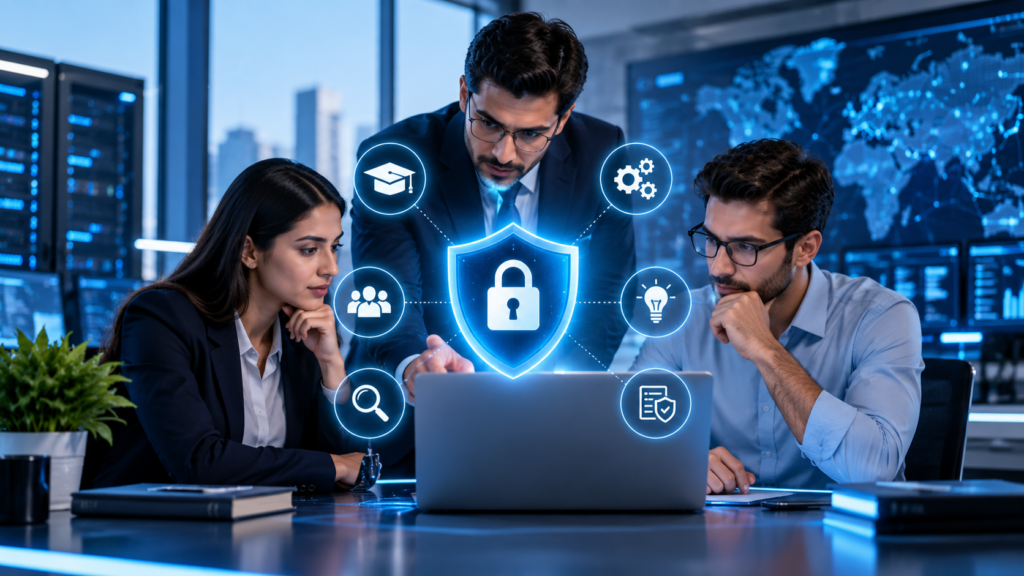
Managed cybersecurity services give organizations access to security professionals and specialized capabilities that may be difficult to maintain internally.
This allows internal IT teams to focus on strategic technology initiatives while experienced security professionals support the ongoing protection of business systems.
As cyber threats continue to evolve, organizations also need to ensure their security approach evolves with them. ParamInfo Managed Security Services are designed to help businesses strengthen their security operations and manage technology risks more effectively.
2. Improve Security Monitoring and Threat Detection
Cybersecurity incidents do not always happen during business hours.
Potential threats can emerge at any time, which means organizations need the ability to monitor important systems and respond quickly when suspicious activity is identified.
Managed cybersecurity can support continuous monitoring across relevant parts of the IT environment.
Depending on the service model and business requirements, this may include monitoring:
- Networks
- Servers
- Endpoints
- Cloud environments
- User activity
- Security events
- Potential vulnerabilities
Continuous monitoring can help businesses identify unusual activity earlier and investigate potential security issues before they create greater operational impact.
The value of security monitoring is not simply collecting more alerts. Businesses need the right processes to identify which events require attention and how they should be handled.
This is why cybersecurity should be connected to broader IT operations. ParamInfo Managed Services can help organizations improve the management and support of critical IT infrastructure and business systems.
3. Reduce Pressure on Internal IT Teams
Internal IT teams already manage a wide range of responsibilities.
They may be responsible for user support, infrastructure, applications, cloud services, software updates and business technology projects. Adding full-time cybersecurity monitoring and incident management to these responsibilities can place additional pressure on already busy teams.
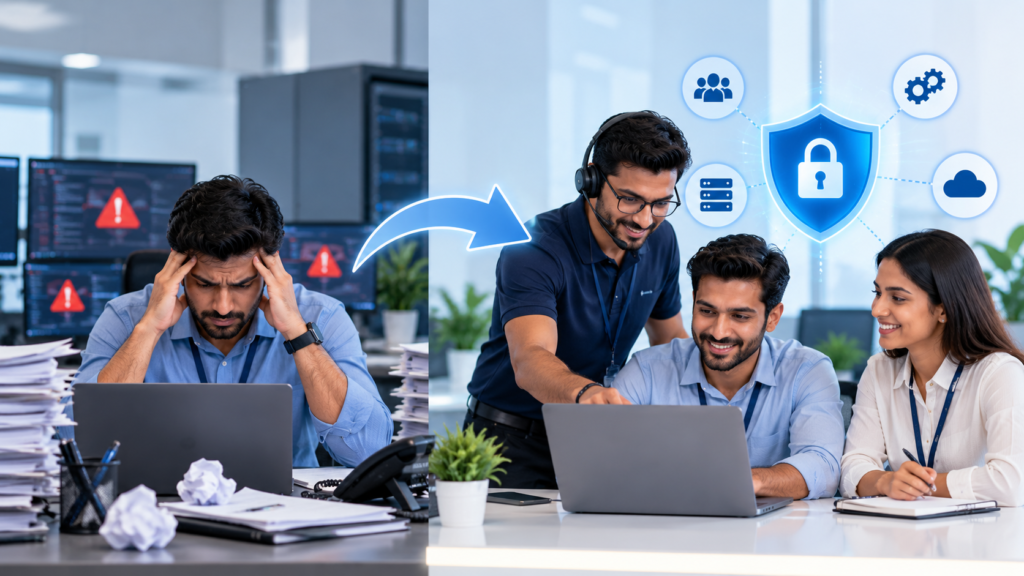
Managed cybersecurity helps organizations extend their IT capabilities.
Instead of requiring internal teams to handle every security activity alone, businesses can work with specialized service providers to support areas such as:
- Security monitoring
- Threat detection
- Vulnerability assessment
- Security incident support
- Patch and update management
- Security reporting
- Risk management
This creates a more sustainable approach to cybersecurity operations.
Internal teams can remain closely involved in security decisions while external specialists provide additional expertise and operational support.
For businesses managing complex technology environments, Application Support & Maintenance can also play an important role in maintaining the availability, performance and ongoing management of business applications.
4. Respond to Security Incidents More Effectively
No organization can assume that it will never experience a security incident.
The ability to respond quickly and systematically is an important part of reducing potential damage.
Without a clear response process, teams may lose valuable time trying to determine:
- What happened?
- Which systems are affected?
- Who should be informed?
- What immediate actions are required?
- How can the issue be contained?
- What steps are needed for recovery?
Managed cybersecurity services can help businesses establish clearer processes for detecting, investigating and responding to security incidents.
A structured incident response approach can help organizations reduce confusion and improve coordination during a critical situation.
Security readiness should also include regular assessments of systems and processes. ParamInfo Testing & Audit Functions can support organizations looking to assess technology environments, identify issues and improve operational quality.
5. Improve Visibility Across Your IT Environment
Businesses often operate a combination of on-premises infrastructure, cloud platforms, employee devices and third-party applications.
As the technology environment becomes more complex, it can become difficult to maintain a complete view of security risks.
Managed cybersecurity can help organizations improve visibility across relevant systems and security events.
Centralized security monitoring can provide better insights into:
- Potential threats
- Security alerts
- Vulnerability trends
- Device and endpoint activity
- User access events
- Network risks
- Security incidents
Better visibility helps security and IT teams make more informed decisions.
It can also help businesses identify recurring issues that require a long-term solution instead of repeatedly addressing individual incidents.
For organizations moving workloads and applications to the cloud, security should be considered as part of the wider transformation strategy.
6. Support Business Continuity and Resilience
Cybersecurity is closely connected to business continuity.
A serious security incident can affect business applications, customer services, internal communication and access to critical data. The impact can extend beyond the IT department and affect the entire organization.
Managed cybersecurity can support resilience by helping businesses improve their ability to detect, respond to and recover from security incidents.
A stronger cybersecurity approach may include:
- Security monitoring
- Threat detection
- Incident response processes
- Data protection measures
- Backup strategies
- Recovery planning
- Regular security assessments
Security and resilience should work together.
For example, strong backup and recovery capabilities can play an important role when a security incident affects critical data or systems.
7. Scale Your Cybersecurity Capabilities as Your Business Grows
Business technology needs change over time.
A growing organization may add new employees, offices, cloud applications, devices and digital services. Every change can create new security considerations.
Managed cybersecurity provides a more flexible approach to scaling security capabilities.
Businesses can adapt their security services based on changing requirements, such as:
- Growth in the number of users
- Expansion into new locations
- Increased cloud adoption
- New applications and systems
- Changing compliance requirements
- Higher security monitoring needs
This flexibility can be valuable for organizations that do not want to make large upfront investments in building every cybersecurity capability internally.
A scalable technology strategy should also consider the broader infrastructure supporting business operations. ParamInfo Network Infrastructure services can help organizations develop and manage reliable technology foundations as their requirements grow.
Managed Cybersecurity Is More Than Technology
Cybersecurity is not solved by purchasing a single security tool.
Effective security requires a combination of:
- People
- Processes
- Technology
- Monitoring
- Governance
- Continuous improvement
Businesses need to understand what systems they are protecting, what risks they face and how security responsibilities are managed.
Managed cybersecurity can help bring these elements together through a more structured security operating model.
It also allows organizations to access ongoing support rather than treating cybersecurity as a one-time project.
As businesses continue their digital transformation journeys, security needs to remain part of every major technology decision. ParamInfo article on making digital transformation your top strategic priority discusses how organizations can align technology initiatives with broader business objectives while building a more modern and resilient digital environment.
How to Choose a Managed Cybersecurity Partner
Choosing the right cybersecurity partner requires more than comparing service lists.

Businesses should consider:
Your Current Security Requirements
Identify the systems, applications and data that require protection and understand your most important security risks.
The Level of Monitoring You Need
Determine whether your business requires continuous monitoring, regular assessments or a combination of security services.
Incident Response Capabilities
Understand how potential security incidents are investigated, escalated and managed.
Technology Integration
Security services should work effectively with your existing infrastructure, cloud platforms and business applications.
Reporting and Visibility
Choose a service model that provides meaningful visibility into security activities, risks and improvements.
Scalability
Your cybersecurity requirements may change as your business grows. The right partner should be able to adapt to changing needs.
Cybersecurity has become a business priority, not just an IT responsibility.
As organizations become more connected and dependent on digital technology, they need a structured approach to protecting systems, applications and information.
Managed cybersecurity services can help businesses access specialized expertise, improve monitoring, reduce pressure on internal teams, strengthen incident response and build greater resilience.
The right approach should be based on your organization’s specific risks and technology environment.
By combining security expertise, continuous monitoring, strong processes and the right technology, businesses can take a more proactive approach to cybersecurity.
ParamInfo helps organizations strengthen their technology environments through Managed Security Services, Cybersecurity Services, Managed Services, Cloud Solutions and IT Infrastructure support.
Looking to strengthen your cybersecurity strategy? ParamInfo can help your business build a more secure, resilient and better-managed technology environment.
Frequently Asked Questions
1. What are managed cybersecurity services?
Managed cybersecurity services provide businesses with access to specialized security expertise, monitoring, threat detection and ongoing security support. They help organizations protect their networks, applications, cloud environments and digital infrastructure without managing every security function entirely in-house.
2. Why does my business need managed cybersecurity?
Businesses face growing cybersecurity risks as they rely more on digital systems, cloud platforms, applications and connected devices. Managed cybersecurity can help improve threat monitoring, incident response, risk visibility and overall security resilience.
3. Can managed cybersecurity help small and medium-sized businesses?
Yes. Small and medium-sized businesses can benefit from managed cybersecurity by accessing specialized security capabilities without the cost and complexity of building a large in-house cybersecurity team.
4. What systems can managed cybersecurity help protect?
Depending on the service requirements, managed cybersecurity can support the protection and monitoring of networks, servers, endpoints, cloud environments, user activity, business applications and other critical IT infrastructure.
5. Does managed cybersecurity provide continuous security monitoring?
Managed cybersecurity can support continuous monitoring based on the selected service model and business requirements. This helps organizations identify suspicious activity and investigate potential security issues more quickly.
6. How does managed cybersecurity reduce pressure on internal IT teams?
Internal IT teams often manage infrastructure, user support, applications, cloud services and technology projects. Managed cybersecurity provides additional specialized support for activities such as threat monitoring, vulnerability assessment, security reporting and incident management.
7. How does managed cybersecurity support incident response?
Managed cybersecurity can help businesses establish structured processes for detecting, investigating, escalating and responding to security incidents. A clear response process can reduce confusion and help teams act more effectively during a security event.
8. Can managed cybersecurity improve visibility across the IT environment?
Yes. Centralized security monitoring can provide better visibility into security alerts, potential threats, vulnerability trends, endpoint activity, user access events and other security risks across the IT environment.
9. How does managed cybersecurity support business continuity?
Managed cybersecurity can support business resilience by helping organizations strengthen threat detection, incident response, data protection, security monitoring, backup strategies and recovery planning.
10. Is managed cybersecurity scalable as a business grows?
Yes. Managed cybersecurity services can be adapted as businesses add employees, locations, cloud applications, devices and new digital services. This provides a more flexible approach to expanding cybersecurity capabilities.
11. What should businesses consider when choosing a managed cybersecurity partner?
Businesses should evaluate their security requirements, required monitoring levels, incident response capabilities, technology integration, reporting, visibility and scalability. The right partner should understand the organization’s technology environment and support its changing requirements.
12. Does managed cybersecurity replace the need for internal IT teams?
No. Managed cybersecurity is designed to support and extend internal IT capabilities. Internal teams can remain involved in security decisions while specialized cybersecurity professionals provide additional expertise, monitoring and operational support.
